
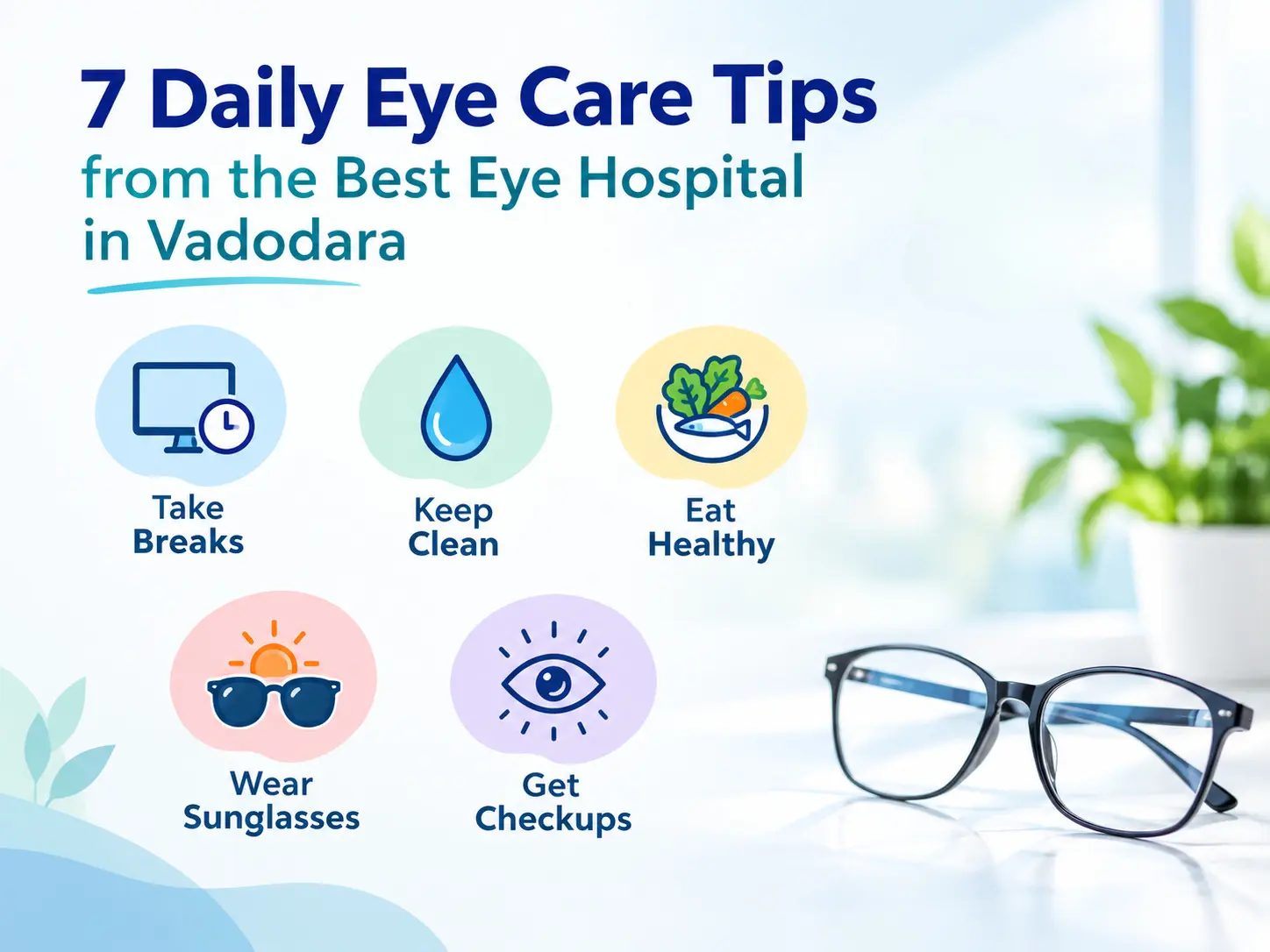
Our eyes work continuously throughout the day, whether we are using a phone, working on a computer, reading, driving, or spending time outdoors. With busy routines and increased screen use, it is easy to ignore basic eye care. However, a few simple daily habits can help maintain comfortable and healthy eyes. If you are looking for guidance from a Best Eye Hospital in Vadodara, regular eye check-ups along with these simple habits can help you take better care of your vision.
At Saatvik Eye Hospital, we believe that good eye health starts with everyday care along with timely professional checkups. Here are seven practical eye care tips that can easily become part of your daily routine.
1. Follow the 20-20-20 Rule
Long hours in front of computers, smartphones, and other digital screens can cause digital eye strain. You may experience tired eyes, dryness, headaches, blurred vision, or difficulty focusing after extended screen use.
A simple way to reduce screen-related discomfort is the 20-20-20 rule. After every 20 minutes of screen use, look at something around 20 feet away for at least 20 seconds. This gives your eyes a short break and allows them to relax.
You can also adjust your screen brightness and keep your monitor at a comfortable distance. Remember to blink regularly because people often blink less while concentrating on a screen.
2. Keep Your Hands and Eyes Clean
Our hands come into contact with many surfaces throughout the day. Touching or rubbing your eyes with unclean hands can transfer dirt and germs around the eye area.
Wash your hands properly before touching your eyes, applying prescribed eye drops, or handling contact lenses. Avoid rubbing your eyes, especially if they feel itchy or irritated.
If you wear contact lenses, follow the cleaning and replacement instructions provided by your eye-care professional. Never share contact lenses, eye makeup, or eye drops with another person.
Simple hygiene habits can help reduce the risk of eye irritation and infections.
3. Get Enough Sleep Every Night
Your eyes also need adequate rest. Insufficient or poor-quality sleep can leave your eyes feeling tired, dry, irritated, or heavy during the day.
Try to maintain a regular sleep schedule and give yourself enough time to rest. If you regularly experience eye discomfort even after getting sufficient sleep, it may be worth discussing the symptoms with an eye specialist.
Reducing screen use shortly before bedtime may also help you maintain a healthier sleep routine.
4. Include Eye-Friendly Foods in Your Diet
A balanced diet plays an important role in overall health, including eye health. Instead of depending on one particular food, try to include a variety of nutrient-rich foods in your everyday meals.
Leafy green vegetables, colourful fruits and vegetables, nuts, seeds, eggs, and fish can be part of a balanced diet. Nutrients such as vitamins, minerals, antioxidants, and omega-3 fatty acids are associated with maintaining healthy eyes.
Drinking enough water is also important, particularly if you frequently experience a feeling of dryness.
If you have a specific nutritional deficiency or medical condition, speak with a healthcare professional before starting supplements.
5. Protect Your Eyes from Sun and Dust
Your eyes are exposed to sunlight, dust, wind, and other environmental factors when you spend time outdoors. Appropriate eye protection can help reduce unnecessary exposure.
When outdoors for extended periods, consider wearing sunglasses that provide proper UV protection. A wide-brimmed hat can also provide additional protection from direct sunlight.
If your work or activities expose you to dust, chemicals, particles, or other hazards, use appropriate protective eyewear. Do not rely on ordinary sunglasses for situations that require safety glasses or specialised protection.
6. Maintain Healthy Screen Habits
Screen use is now a normal part of work, education, and entertainment. The goal is not necessarily to avoid screens completely but to use them in a more eye-friendly way.
Keep your computer screen at a comfortable viewing distance and position it so that you do not need to constantly look upward or downward. Adjust text size and screen brightness so you can read comfortably without straining your eyes.
Remember to take short breaks during long work sessions. If air conditioning, fans, or dry environments make your eyes uncomfortable, try to avoid having direct airflow blowing toward your face.
If dryness or irritation continues, consult an eye-care professional rather than regularly using eye drops without guidance.
7. Don't Ignore Regular Eye Checkups
One of the most important daily eye-care habits is knowing when you need professional attention. Some eye conditions can develop gradually without obvious symptoms during the early stages.
Regular eye examinations can help identify changes in vision and detect certain eye conditions at an earlier stage. People with diabetes, high blood pressure, a family history of eye disease, or previous eye problems may require more regular monitoring.
You should also seek prompt medical attention if you experience sudden vision loss, severe eye pain, sudden flashes or floaters, double vision, significant redness, or any other sudden change in your vision.
A professional examination can help determine whether your symptoms are related to simple eye strain or require further evaluation.
Why Daily Eye Care Matters
Many people only think about eye health when their vision becomes blurry or their eyes start hurting. However, eye care is not only about correcting vision. It also involves protecting the eyes, recognising changes early, and maintaining healthy habits.
The Best Eye Hospital in Vadodara should provide appropriate evaluation and guidance based on each patient’s individual needs. At Saatvik Eye Hospital, patients can seek professional guidance for different eye-care concerns and receive recommendations based on their examination and symptoms.
Remember that online information can help you understand general eye-care practices, but it cannot replace an eye examination when you have persistent or concerning symptoms.
When Should You Visit an Eye Specialist?
Consider an eye examination if you notice:
- Frequent blurred or changing vision
- Persistent eye dryness or irritation
- Regular headaches while reading or using screens
- Difficulty seeing at night
- Eye pain or unusual redness
- Frequent flashes or new floaters
- Double vision
- Sudden changes in eyesight
Early evaluation can make it easier to understand the cause of your symptoms and identify the right treatment or management approach.
Conclusion
Healthy eyes need consistent care, not just attention when a problem appears. Simple habits such as taking screen breaks, maintaining good hygiene, eating a balanced diet, protecting your eyes outdoors, getting enough sleep, and having regular eye checkups can support long-term eye health.
If you are looking for the Best Eye Hospital in Vadodara, choosing an experienced eye-care team and getting the right examination is an important step toward better vision and eye health. Saatvik Eye Hospital is committed to providing professional eye-care guidance based on individual patient needs.
Frequently Asked Questions
How can I keep my eyes healthy every day?
Follow basic habits such as taking screen breaks, getting adequate sleep, eating a balanced diet, keeping your hands clean, protecting your eyes outdoors, and attending regular eye examinations.
Which eye treatments are available at the Best Eye Hospital in Vadodara?
Eye hospitals may provide services such as routine eye checkups, cataract treatment, glaucoma care, retina evaluation, laser procedures, vision correction, and treatment for common eye conditions.
How often should I visit an eye specialist in Vadodara?
A routine eye examination may be recommended every one or two years, but people with diabetes, family history of eye disease, or existing eye problems may need more frequent checkups.
What foods are good for eye health?
A varied, balanced diet containing leafy greens, colourful fruits and vegetables, nuts, seeds, eggs, and fish can provide nutrients that support overall eye health.
When should I visit the Best Eye Hospital in Vadodara?
You should consider an eye examination if you have persistent vision changes, eye pain, frequent headaches related to vision, ongoing irritation, or other concerning symptoms. Sudden vision loss or severe eye symptoms require prompt medical attention.
Are regular eye checkups necessary if my vision seems normal?
Yes. Some eye conditions may not cause noticeable symptoms in their early stages. Regular examinations can help monitor your eye health and identify changes that may otherwise go unnoticed.